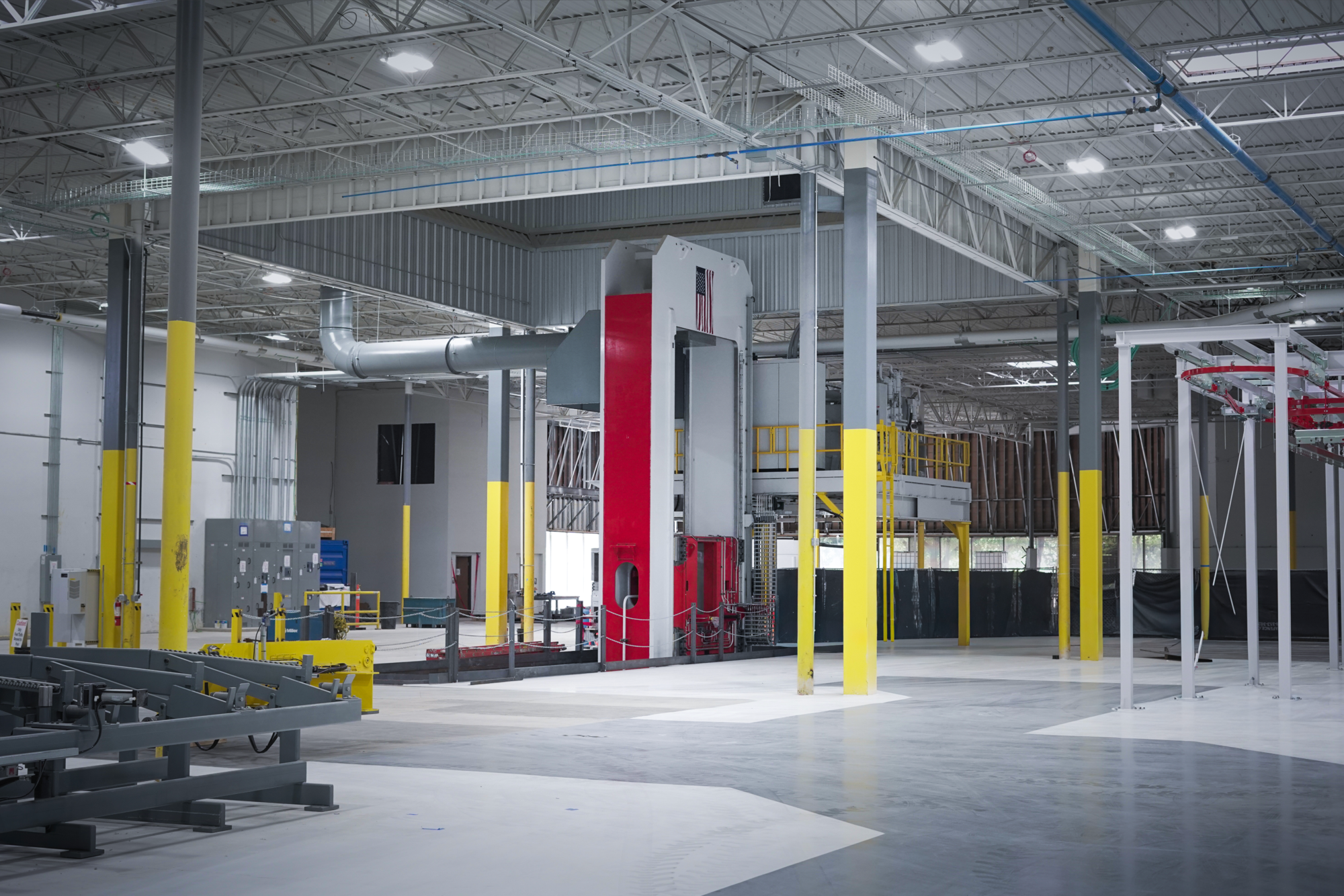
Material arrives with a name.
Every bar carries its heat number, mill and certificate before it is ever cut. The line knows what it is working with.
One system over every machine, every operation, every part.
Machines from a dozen vendors. An MES from the dial-up era. Scheduling in spreadsheets, quality in binders, maintenance in someone's head. Each system knows its slice. None of them knows the factory. When something goes wrong, you reconstruct what happened instead of seeing it.
A modern factory is an orchestra of people, processes and machines. One layer plans the work. Another drives the machines, monitors the state and records the results. Together they produce a line that can be run, configured, audited and scaled rapidly.
Not a dashboard bolted on afterwards. The same layer that plans the work issues the commands, watches the state and keeps the record.
Every bar carries its heat number, mill and certificate before it is ever cut. The line knows what it is working with.
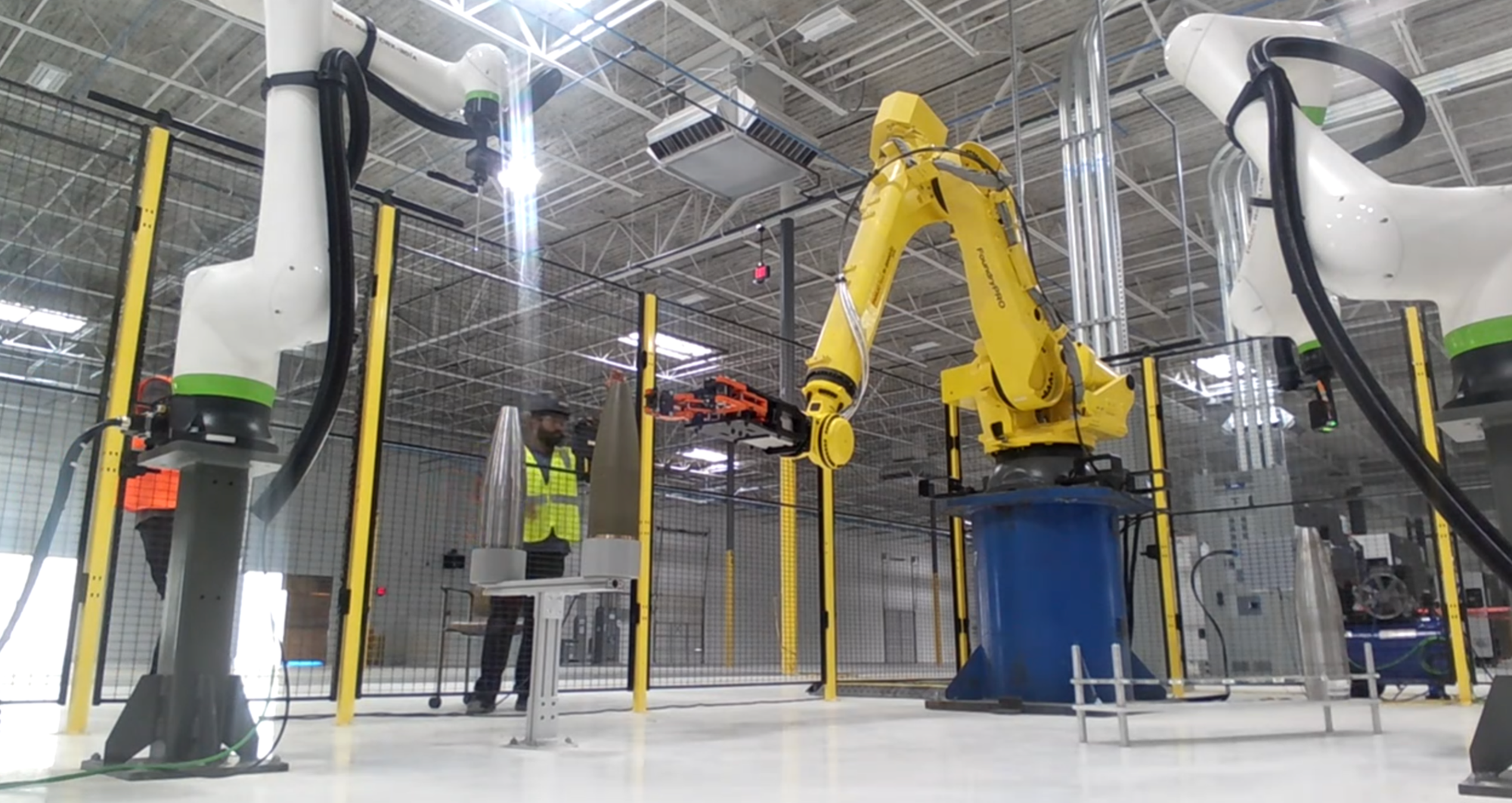
Transfers are commanded, not improvised. Each handoff between cells is issued, acknowledged and timestamped.
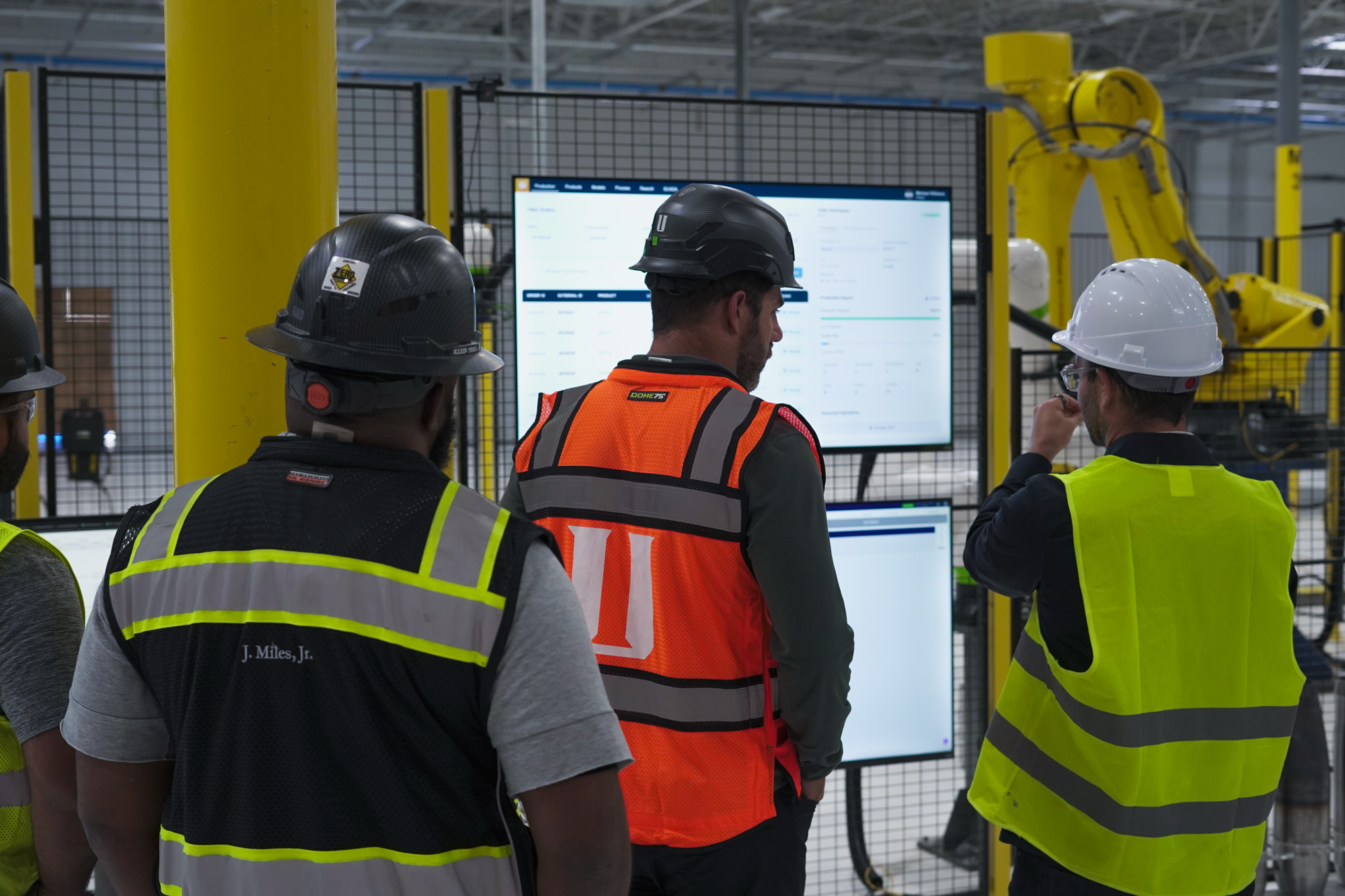
Nobody walks the line with a clipboard to find out how the shift is going. State is a property of the system, not a task.
An order is authored once, versioned and released to the floor. Not typed into six systems and reconciled later.
Ask where part 043ad065 is and the answer is on screen, not reconstructed from three people and a spreadsheet.
Machine vision results, tolerances and operator actions attach to the serial. The proof exists before anyone asks for it.
Production, quality and maintenance are not three products with three logins. They are three views of the same factory.
Schedule, release and run. The order and the floor are the same object, so there is nothing to reconcile at the end of the shift.
Inspection validates the process and is not a separate system. A failed part informs the system with almost zero latency, creating a feedback loop that controls the process parameters.
Equipment performance informs the maintenance cycle, not downtime. Repairs are scheduled around real-time equipment state rather than failure, increasing reliability and uptime.
| The old way A stack of point solutions | The UNION way One orchestration layer |
|---|---|
| MES, SCADA, historian, quality and maintenance, each bought separately | One system plans the work, runs it and records what happened |
| Every pair of systems needs an integration to hold it together | Machines, people and data connect through the same layer |
| The factory can only do what the integrations happen to allow | The factory is defined once, in code and versioned |
| Adding a line means starting the integration project over | Adding a line is a new configuration, not a new project |
An advanced factory usually starts as a procurement exercise: choose an MES, a historian, a quality system and a scheduler, then pay someone to make them agree. That work never finishes, and the factory can only ever do what the integrations allow. We take the operation end to end instead. One layer, one data model, one thing to hold accountable.
Plans the work and tells the floor what to run.
Direct machine control. Real-time telemetry from every cell.
The full stack runs on hardware in your plant. No dependency on an outside network to keep the line moving.
Cells stay under local control while production data aggregates across sites for the people who need the whole picture.
For sites that would rather not run infrastructure. Same system, same data model, operated on your behalf.
Deterrence is built, not declared. We stopped waiting for someone else to build it.